
How Prison, Redemption and the Power of Art Rewrote the Life of Zwelani Ndebele

There are moments in life when a person reaches a point where they must confront themselves, their choices and the direction of their future. For some people such moments become the beginning of defeat while for others they become the foundation of transformation. The story of Zwelani Ndebele is a story of transformation. It is a journey that moves through creativity, pain, addiction, imprisonment, self-reflection, healing and ultimately redemption.
Today Zwelani is recognised as a writer, spoken word artist, songwriter, creative storyteller and community advocate who uses his lived experiences to educate and inspire others. His journey has not been perfect but it has been honest. Instead of hiding the difficult chapters of his life he has chosen to use them as lessons that can help others avoid the same struggles.
His most significant body of work, “Manifesto of a Dreamer in Chains,” was born during his time in prison. The writings reflect the thoughts of a man who found freedom through creativity while physically confined behind prison walls. They represent his journey of self-discovery and his belief that a person’s circumstances do not have to determine their destiny.
For Zwelani, art became more than a career choice. It became a form of healing, a way of communicating with society and a tool for changing lives.
“I started writing thinking I was writing about my personal life but later I realised that my words were also helping other people,” he explains. “When I see another person getting healed through my work I also heal.”
Born on 29 February 1988 at Mpilo Central Hospital in Bulawayo, Zwelani Ndebele grew up in Nketa 7 where his passion for creativity started developing at an early age. Being born on a leap year has always been a unique part of his identity and he often jokes about being a child who arrives only once every four years.
He was born to Msolinah Ndebele and Dorcas Dube who played important roles in his upbringing. From a young age Zwelani demonstrated a strong imagination and a natural ability to express himself through words. He became known for his writing abilities while still at school especially through composition writing where his storytelling skills captured the attention of those around him.
His primary education was completed at Manondwane Primary School before he proceeded to Gifford High School. Later he completed his secondary education at Maranatha Adventist Secondary School. Beyond academic education he continued developing himself through various skills training programmes including ICDL computer studies at Masmore Computer College as well as basic cookery, basic baking and bartending at Global Institute.
Although he explored different areas of learning his heart remained connected to the arts. For Zwelani creativity was not simply about performing. It was about communicating messages, challenging social issues and giving people a different way of understanding life.
His relationship with the arts became stronger in 2002 following one of the most painful experiences of his life. The death of his younger sister changed everything. The loss affected the family deeply and created a difficult period where everyone struggled to deal with grief. His father later moved to Masvingo while his mother also found it difficult to remain in the house where her child had passed away.
At only 13 years old Zwelani found himself carrying responsibilities that were far beyond his age. He became part of a child-headed household situation where he had to look after his younger siblings, Sandile Ndebele and Nomzamo Ndebele.
It was a lonely and challenging period. He had emotions he did not know how to express and responsibilities he did not know how to manage. However, during this difficult time he discovered something that would later become central to his life.
Writing became his voice.
Unable to openly share his pain, he began putting his feelings into songs and stories. One of his earliest songs released in 2004 was titled “Akekho Okwaziyo” which he wrote after losing his sister. The song carried his grief, confusion and questions about life.
At the time Zwelani had no professional music experience. He had never been inside a recording studio and did not know how the music industry operated. However, he believed in the message of his song and wanted it to reach people.
His search for opportunities led him to Radio Dialogue and Ingwe Studios in Bulawayo. Eventually he recorded the song at Ingwe Studios in Hillside with producer Khuxxman.
That moment became the beginning of his artistic journey.
For the young artist from Nketa, recording a song was not just about creating music. It was about proving that his experiences mattered and that his voice could reach beyond his immediate surroundings.
The success of his first recording encouraged him to explore other forms of artistic expression. He began becoming involved in theatre, music drama and performance because he believed that storytelling could influence how people viewed society.
“I realised that if people see something happening in a drama they understand it differently. If they hear a song they remember the message. Art has the ability to change attitudes and opinions,” he says.
This belief would later become the foundation of his work as an artist and community educator.
His early artistic development also led to the creation of performance groups that would become important platforms for young creatives in Bulawayo.
One of the groups that shaped his journey was Ghetto Rhythm Dance Group, which he founded together with Langton Khumalo, Solomon Mavhunga, Thamsanqa Ngulube and his younger brother Sandile Ndebele.
The group was created from a desire to give young people an opportunity to express themselves through performance. At the beginning they were not professional dancers and did not have formal training but they had passion, commitment and a belief that creativity could change their community.
The group later evolved and became part of a wider artistic movement that included Ghetto Rough, Bayethe Performing Arts and eventually Skies Arts Group.
Through these platforms Zwelani worked alongside talented creatives including Langton Khumalo, the late Walter Gwanzura, Arthur Ndlovu who was a former Starbrite winner, Selina Moyo, Ziqondile Dlodlo, Charity Taitos and others.
These experiences exposed him to different forms of performance and strengthened his belief that the arts industry could create opportunities for young people.
The groups performed at social gatherings including weddings, corporate events and community functions. They also secured opportunities to perform at popular entertainment venues of that time including Miriam’s Bar, JZ Ebumnandini, Pub Maison Nic, Palace Hotel, Cecil Hotel and Metropolis Pub and Grill.
Their performances also took them outside Bulawayo to places such as Dete and Gwanda where they interacted with different audiences and communities.
For Zwelani these performances represented more than entertainment. They showed him that young people from ordinary backgrounds could create meaningful spaces through creativity.
However, while his artistic journey was growing, another battle was slowly developing in his personal life. The same pain that pushed him towards creativity also became connected to struggles that would later affect many areas of his life.
His relationship with alcohol started during a period when he was trying to cope with responsibility, grief and the pressure of growing up too quickly.
What started as an attempt to escape emotional pain gradually became a dependency that affected his relationships, education, employment opportunities and personal development.
This chapter of his life would later become one of the most difficult but also most transformative parts of his journey.
Addiction, Consequences and the Road Towards Redemption
For many young creatives, the journey into the arts begins with passion, dreams and a desire to express oneself. For Zwelani Ndebele it was no different. He had discovered a powerful gift of storytelling and performance that allowed him to connect with people. However, behind the creativity and public performances was a young man carrying emotional wounds that he had never fully confronted.
After losing his younger sister and becoming part of a child-headed household, Zwelani found himself trying to survive responsibilities that came before he was emotionally prepared for them. At a young age he had to take care of younger siblings while also trying to continue with his education and develop his artistic dreams.
Looking back today, he acknowledges that he was searching for a way to cope with the pressure and loneliness he experienced during that period.
“I wanted to feel big. I wanted to feel like an adult. I wanted to belong,” he reflects.
It was during this period that alcohol entered his life. What started as an attempt to escape emotional pain slowly became a habit that affected different areas of his life. Like many people facing addiction, he did not immediately recognise that the behaviour was becoming harmful.
At the time he also believed that alcohol was connected to the lifestyle of being an artist. He thought that drinking gave him confidence, energy and the personality needed to survive in the entertainment industry. However, with time he realised that the same thing he believed was helping him was gradually taking away important parts of his life.
Alcohol began affecting his relationships, his career opportunities and his connection with his family.
There were times when he would attend rehearsals and performances then return home in the early hours of the morning while intoxicated. His father, who had always believed in his intelligence and potential, noticed the changes taking place.
Despite his struggles with alcohol Zwelani never completely abandoned education. He continued attending school but the effects of addiction eventually contributed to challenges that affected his academic journey. After leaving Gifford High School he continued his studies at Maranatha Adventist Secondary School where he completed his secondary education.
However, the impact of alcohol continued beyond education.
Opportunities that could have changed his life were affected because of his behaviour. He recalls that many people initially trusted his abilities and gave him opportunities but later became disappointed because alcohol affected his reliability and decision-making.
His personal relationships also suffered.
He explains that alcohol affected his confidence and his ability to communicate honestly with people. There were situations where he struggled to express himself without depending on alcohol.
“I could love someone but because I approached them while drunk things would not work out,” he says.
The consequences of addiction continued to accumulate. Over time he lost important personal documents including his birth certificate, national identity card, school certificates and certificates from short courses he had completed.
Without these documents he felt as if his identity had been taken away from him.
For years he struggled to rebuild his life while carrying the weight of decisions made during his addiction.
However, one of the most important lessons he learnt is that addiction is not only about the substance itself. It is also connected to emotional struggles, unresolved pain and the need for support systems that help people before they reach crisis points.
His family tried many ways to help him. His father sought assistance from different sources including counselling, religious interventions and traditional practices. The family wanted to see him recover and return to the person they knew he could become.
Despite these efforts, the biggest change had to come from within himself.
“I learnt that nobody can change my life except me. People can advise you, people can pray for you but if your heart does not accept change nothing will happen,” he explains.
The turning point came after a serious family conflict that changed the direction of his life.
Following an argument with his younger brother Bhekumuzi Ndebele, a confrontation occurred that resulted in Zwelani being arrested. He explains that the incident escalated quickly and resulted in him facing serious charges.
He was arrested and later appeared in court. The experience forced him to confront the reality of his actions and the consequences they had created.
In January 2024 he began serving time at Plumtree Prison, where he remained until his release on 15 May 2025.
For many people prison is viewed only as punishment. For Zwelani it became a place of deep reflection.
The reality of being separated from everyday life forced him to examine the person he had become and the person he wanted to be.
“When I entered prison I realised that the people I thought were always around me were no longer there. I was now with 75 different people from different backgrounds. That is when I started looking at myself differently,” he says.
The prison experience became the beginning of a personal transformation.
Behind those walls he began writing extensively. Without access to many resources he used whatever materials he could find to express his thoughts. He wrote using pencils and papers that were difficult to access.
His writings became a conversation between his past, his present and the future he wanted to create.
It was during this period that “Manifesto of a Dreamer in Chains” was born.
The work was not written by someone trying to deny his mistakes. It was written by someone accepting responsibility and searching for meaning.
Through his writing he explored themes of forgiveness, change, hope and the possibility of rebuilding a life after failure.
One of the powerful realisations he had while in prison was that a person outside prison could sometimes be suffering more than someone behind bars because they may be trapped by fear, anger, addiction or hopelessness.
His writing challenged society to think differently about rehabilitation and second chances.
A fellow inmate, Theofilus Dube, once read one of his writings and encouraged him by saying that the words had the power to become something bigger.
“He told me that if someone picked up that paper and read it they could write a movie from it. He told me that when I leave prison I could go places because of my writing,” Zwelani recalls.
Those words strengthened his belief that his experiences could become a source of purpose.
Prison did not erase his past but it gave him time to understand it.
It gave him the opportunity to rediscover the artist who had been buried beneath years of struggle.
The Prison Walls That Built a Writer
When Zwelani Ndebele entered Plumtree Prison on 16 January 2024 he carried more than the weight of a legal sentence. He carried years of unresolved pain, broken relationships, disappointment, regret and the consequences of choices that had affected different parts of his life. However, what he discovered inside those prison walls was something he had lost along the way: a deeper understanding of himself.
For Zwelani, prison became a place of reflection. It became a space where he could no longer run away from his past. Away from the distractions of everyday life, he was forced to confront his actions and think about the person he wanted to become.
He does not describe prison as a place he celebrates or wishes for anyone to experience. Instead, he describes it as a difficult chapter that taught him important lessons about responsibility, discipline, forgiveness and personal transformation.
“I am not glorifying prison,” he explains. “I am showing how prison changed my life. If I had not passed through that experience I do not know if I would still be alive today. I believe it became part of God’s plan to bring me back to myself.”
Inside prison, Zwelani began rebuilding his relationship with creativity. The same talent that had been present during his childhood and early artistic years returned with a new level of maturity. Writing became his daily companion and a way of processing his experiences.
With limited resources he continued writing. He used pencils and pieces of paper to record his thoughts. At a time when he had lost many things in life, including important personal documents and opportunities, he found something that could not be taken away from him.
His voice.
His writings became a reflection of a person who was physically confined but mentally searching for freedom.
This journey produced one of his most important literary works, “Manifesto of a Dreamer in Chains.”
The title itself captures the contradiction of his experience. He was a man living behind prison walls yet his imagination, creativity and dreams remained free.
The work explored the emotions of a person who had made mistakes but still believed that life could be rebuilt. It addressed themes of redemption, forgiveness, hope and the importance of changing one’s mindset.
Through his writings Zwelani began speaking not only about his own experiences but about the struggles faced by many people who feel trapped by their circumstances.
He started seeing his own journey as a lesson for others.
One of the powerful messages in his writing was that sometimes people outside prison can also be imprisoned by destructive habits, negative thinking and circumstances that prevent them from becoming their best selves.
During his time in prison Zwelani also discovered another important part of his identity.
Leadership.
Despite the difficult environment he found himself in, he began taking responsibility and contributing positively to prison life. He was trusted with different responsibilities including assisting with organising information, managing activities and later becoming involved in prison gardening projects.
He progressed from a lower classification to a B Class prisoner and later an A Class prisoner, where he was given greater responsibilities.
These experiences helped him realise that leadership had always been part of his personality.
“I discovered that I have leadership qualities. Even in prison people trusted me with responsibilities. It made me realise that there was something inside me that I had not recognised before,” he says.
The prison environment also gave him the opportunity to collaborate creatively with other inmates. Together with Simz Ncube and Kwenzekile Ncube, he formed a creative initiative that used different artistic approaches to encourage reflection and positive change.
Each artist contributed through their own discipline. Simz used hip hop and focused his lyrics on redemption, second chances and overcoming struggles. Kwenzekile used poetry to address social issues including gender challenges. Zwelani used storytelling, open discussions and personal experiences to encourage people to reflect on their lives.
Their work demonstrated the ability of creativity to exist even in the most challenging environments.
For Zwelani, art became a rehabilitation tool.
It allowed people to express emotions that they could not easily communicate. It created opportunities for conversations about mistakes, responsibility and the possibility of change.
During this period he also developed other writings including “Masivuselelane sakhane ngeqiniso, ngoxolo langothando” which focused on rebuilding people through truth, peace and love. Another work titled “Umuntu akalahlwa, ikusasa alaziwa” carried the message that no person should be permanently judged by their past because the future can still change.
These writings reflected his growing understanding that people need opportunities to transform.
His experiences also changed how he viewed his family. When he first entered prison he felt betrayed because his family had reported the incident that led to his arrest. He struggled emotionally and initially believed he could never forgive them.
However, time allowed him to reflect.
He began recognising his own mistakes and understanding the pain his actions had caused those closest to him.
The person who eventually became one of his greatest supporters was the same person who had been hurt during the incident that led to his arrest.
Zwelani describes his father as a loving parent who never stopped believing in him. Even after everything that happened, his father continued supporting him and publicly expressing his belief that his son could change.
This relationship became an important part of his healing journey.
“My father was the first person to trust me again. The person I had hurt became the person who stood with me,” he says.
While in prison Zwelani also continued receiving encouragement from people who believed in his potential. Through visits and support from individuals including members of Christ Embassy Church he received materials that assisted him with writing.
Those small acts of support strengthened his determination to rebuild his life.
When he was released on 15 May 2025 he did not return home as the same person who had entered prison.
He returned with a mission.
He carried with him a paper bag filled with his writings and a renewed understanding of his purpose.
That paper bag represented a new beginning.
It contained the thoughts of a man who had lost many things but rediscovered the most important one.
His purpose.
The Birth of an Advocate, Writer and Voice for Change
When Zwelani Ndebele walked out of Plumtree Prison on 15 May 2025 he stepped into a world that had changed while he was away. However, the biggest change was not outside him. It was within him.
He left prison carrying a paper bag filled with his writings, but more importantly he left with a renewed understanding of who he was and what he wanted his life to represent.
For years he had been known by different versions of himself. Some people remembered the talented young artist from Nketa. Others remembered the struggles, the addiction and the mistakes that had led him into conflict with the law. After his release he realised that society often finds it easier to remember a person’s worst moments than to recognise their efforts to change.
This became one of the biggest challenges he faced after prison.
Many people struggled to believe that he had changed. Some questioned his involvement with respected artists, media personalities and community leaders. Others continued defining him by his past instead of recognising his journey of transformation.
However, Zwelani made a decision not to fight people’s opinions through arguments. Instead he chose to let his actions speak.
He understood that rebuilding trust would not happen overnight. It would require consistency, humility and commitment.
“I know people have different versions of me. Some know the person who struggled with alcohol. Some know the person who was good at school. Some know the person who can create and inspire. But I know myself. I know the person I am becoming,” he says.
His first step after prison was reconnecting with the arts.
The paper bag filled with writings became a symbol of his new direction. He carried his work to the National Arts Council of Zimbabwe (NACZ) where he met Nyandoro and was asked about his artistic identity.
At first Zwelani struggled to explain himself because for many years he had viewed himself simply as someone who writes and tells stories. However, through the conversation he began recognising the value of his own abilities.
He realised that he was a writer, a storyteller and a spoken word artist.
He later registered with the National Arts Council of Zimbabwe as a spoken word artist, giving formal recognition to the creative identity he had been building throughout his life.
This moment became an important milestone because it helped him understand that his experiences, including the difficult ones, had shaped him into an artist with a unique message.
Unlike many artists who create from imagination alone, Zwelani creates from lived experience.
His stories come from pain, survival, mistakes, forgiveness and hope.
He believes that this is what gives his work its power.
“People connect with my work because I am not speaking about something I read somewhere. I am speaking about something I have lived,” he explains.
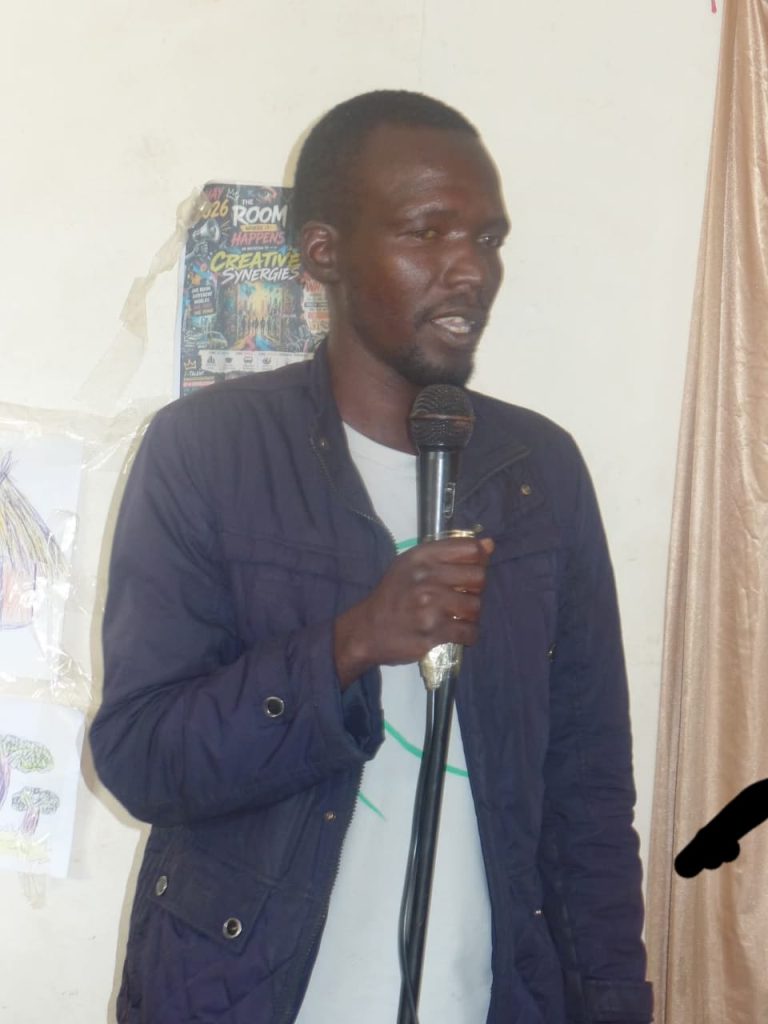
After his release he began sharing his story through different platforms. He visited schools, churches and community spaces where he spoke openly about addiction, decision-making, personal responsibility and the importance of having positive dreams.
His message was especially targeted at young people because he believes prevention is better than rehabilitation.
He understands that many young artists face similar pressures that affected his own journey. Some believe that alcohol and drugs are connected to creativity or popularity. Others struggle with emotional challenges but have no safe spaces to discuss their experiences.
Through his talks he encourages young people to understand their identity and protect their future.
One of the schools where he has shared his experiences is Cyrene Mission. He has also taken his awareness campaigns to Lighthouse Foundation College and Tsetse Primary School where he speaks to learners about choices, discipline and the dangers of substance abuse.
For Zwelani these visits are not about presenting himself as someone perfect.
They are about showing young people that mistakes do not have to destroy their future.
“I tell them the truth because sometimes children learn things outside textbooks that are never discussed at home. If my story can stop one young person from making the same mistakes I made then my journey has a purpose,” he says.
His community outreach has also extended to churches and community organisations. He has worked with Christ Embassy Plumtree, travelling with them to crusades across Plumtree rural communities. He has also shared his story at UAFC Njube, the Seventh Day Adventist Church in Figtree and different branches of the Zion African Church across Figtree, Matobo and Mangwe.
He has also participated in community-based anti-drug campaigns including meetings with Magwegwe Concerned Senior Citizens, where he shared his experiences twice.
Through these engagements he has discovered that his story reaches people who are silently struggling.
Some of the strongest responses have come from ordinary community members who heard him through radio.
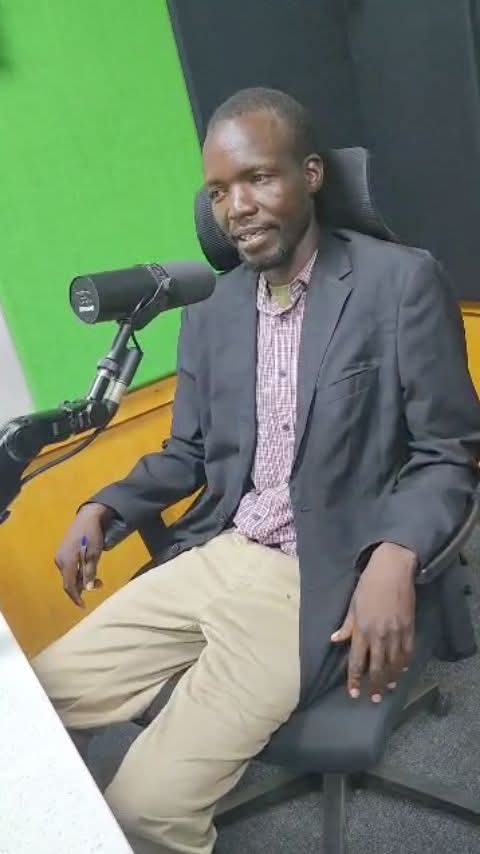
After joining Radio Bukalanga, Zwelani became a familiar voice to many listeners. Programmes hosted by Lady D and Umnikazi wamabhasi provided him with platforms to share his experiences and discuss issues affecting communities.
Through these programmes he connected with people who had never met him personally but felt inspired by his honesty.
One person who became deeply connected to his story is Gogo Otilia, a 79-year-old listener who describes Zwelani as her adopted son from the airwaves.
Despite never knowing him personally before hearing him on radio, she was touched by his story and introduced him to her family and grandchildren. For Zwelani such relationships demonstrate the power of media and storytelling to create human connections beyond physical boundaries.
His media journey has also included interviews and features on platforms such as Radio Bukalanga, Khulumani FM and Skyz Metro FM as well as newspapers including The Standard, NewsDay and The Chronicle alongside various online platforms.
These opportunities allowed him to reach wider audiences and present a different narrative about rehabilitation and second chances.
Instead of being defined by what happened in the past, he began being recognised for what he was doing in the present, a writer, an advocate and a voice for change.
Awards, Collaborations and Building a New Creative Legacy
For many years Zwelani Ndebele carried stories inside him without fully understanding the power they held. He wrote because writing helped him process emotions, understand experiences and communicate messages that were difficult to express through ordinary conversations. However, after prison, he began to realise that his writing was not only a personal form of healing. It was also a tool that could influence, educate and inspire society.
His journey as a writer gained wider recognition through his involvement with United World of Literature (UWL), an online literary platform that he discovered through Facebook. Initially, Zwelani joined the platform simply because of his love for reading and writing. He wanted to interact with other writers and learn from different creative voices across the world.
At the time there were no competitions or nominations. He was simply a participant who enjoyed sharing and reading literary works. However, as the platform developed, Writer of the Month competitions were introduced and Zwelani’s work began receiving attention.
He was nominated for the Writer of the Month recognition and still keeps the document confirming his nomination.
This recognition became meaningful because it showed him that his words could travel beyond his immediate community. A person who once wrote privately during difficult moments was now receiving acknowledgement from an international literary space.
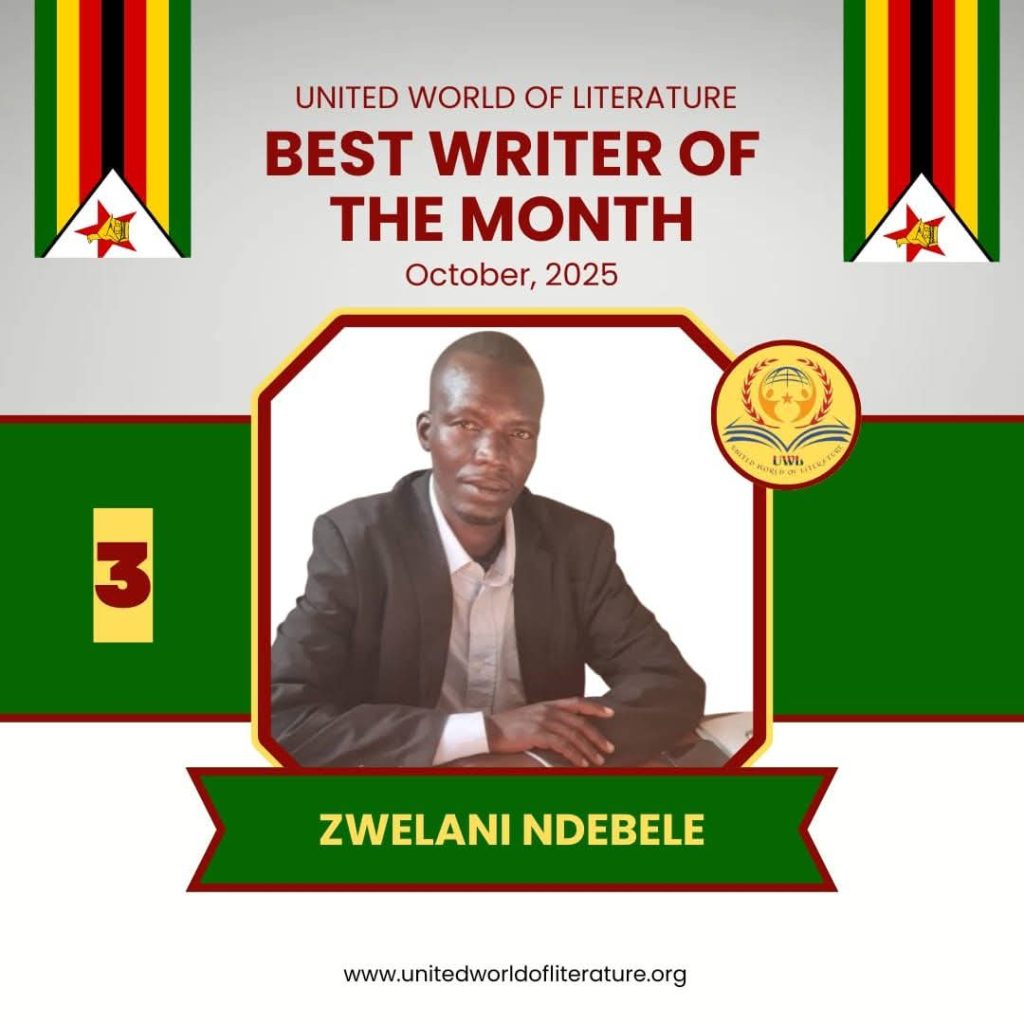
His writing journey continued growing and he was nominated as Writer of the Month consecutively during October, November and December 2025.
For Zwelani these achievements are not only about awards. They represent proof that transformation is possible.
He remembers a time when he would tell his younger siblings that one day he would receive recognition for his creativity. At that time it sounded like a dream but today it has become part of his reality.
“I used to tell my young brothers and sisters that one day I would win an award. They thought it was just a dream. Today I can see that dreams can happen when you keep believing and working,” he says.
One of his most significant literary achievements remains “Manifesto of a Dreamer in Chains.” The work gained attention because of its honest reflection on life behind prison walls and the possibility of rebuilding after mistakes.
The writings presented a different conversation about prisoners and rehabilitation. Instead of focusing only on punishment, Zwelani’s work explored the human being behind the crime, the emotional struggles people face and the importance of giving people opportunities to change.
His writings attracted media attention and led to invitations from schools, churches and community organisations where people wanted to hear more about his journey.
Through these platforms he discovered that his story had become bigger than himself.
It was now serving as a message of hope.
Beyond his personal writing, Zwelani has continued building relationships within Zimbabwe’s creative sector. He believes that collaboration is important because the arts industry grows when creatives support each other.
One of his important collaborations has been with Millagre Raymond, a freelance journalist and founder of Indebo Edutainment Trust.
Together they created The Creative Confluence, a joint initiative between Millagre’s organisation and Zwelani’s own initiative, i-Talent Emagudugudwini.
The initiative focuses on creating opportunities for marginalised artists and using creativity as a platform for community development.
For Zwelani, this work reflects his understanding that talent exists everywhere but many artists lack platforms, mentorship and support systems.
He believes that the creative industry must do more to identify and support artists from communities that are often overlooked.
His partnership with Millagre Raymond has also resulted in another major literary project titled “Places We’ve Been & Things We’ve Been Through.”
The book is a fusion of short stories and poetry that documents real-life experiences. Through the project they aim to promote honesty and truth by sharing personal journeys that many people often hide.
The book reflects their belief that storytelling can help people understand themselves and others better.
“It is about telling the truth about where we have been and what we have gone through. Our experiences can become lessons for someone else,” he explains.
Zwelani has also worked with renowned entertainer Madlela Skhobokhobo through the project “Xola.” This opportunity became an important step in his reintegration into the creative industry because it demonstrated that established artists were willing to recognise his talent and support his growth.
He also worked with Catholic Vibe Tribe in pioneering i-Talent Emagudugudwini, an initiative focused on supporting artists from disadvantaged communities.
Another significant contribution was his role alongside Mjox from Skyz Metro FM in facilitating a recording deal for Misty the Nguni Queen, creating opportunities for another emerging artist.
These collaborations reflect Zwelani’s commitment not only to building his own career but also creating pathways for other creatives.
A major influence in his new chapter has been the support he received from individuals within the Zimbabwe Open University (ZOU) community. He particularly acknowledges Dr Nhlanhla Sibanda, Dr Mukomana and Mashushire, whom he says believed in him when he was still struggling to believe in himself. According to Zwelani, these individuals saw potential in him beyond his past mistakes. “They saw something in me that I could not see in myself at that time,” he says. Their encouragement helped him regain confidence and understand that his experiences could become a foundation for meaningful work.
Today he speaks about them with gratitude because their support represents the importance of mentorship and people who are willing to invest in others.
For Zwelani, one of the biggest challenges after prison was rebuilding trust. However, through consistency and dedication he has slowly changed perceptions.
He has found himself sharing platforms with respected figures in the arts and cultural sector including legendary creatives such as Madlela Skhobokhobo, as well as engaging with influential community leaders. He also remembers his friendship with the late Babongile Skhonjwa, whose support and belief in creative people left a lasting impact.
These relationships have shown him that a person’s future should not be limited by their past.
Today Zwelani continues developing several creative projects. Beyond “Places We’ve Been & Things We’ve Been Through,” he is working on other writings including a project titled “Stripped Away” which explores experiences of loss, identity and rebuilding.
He is also developing a project called “Secrets That Kill,” which focuses on hidden struggles that affect people’s lives but are often ignored.
Through these works he continues exploring difficult conversations that many people avoid.
This has become one of the defining features of his artistic identity.
He is not interested in creating art only for entertainment.
He wants to create art that challenges, educates and transforms.
Fighting Addiction, Mentoring Young People and the Vision for a Cultural Hub
For Zwelani Ndebele, art is not simply a profession. It is a life-changing force that helped him survive some of the darkest moments of his life. It gave him a voice when he felt unheard, provided comfort when he experienced pain and created a pathway towards rebuilding himself after years of struggle.
His journey has taught him that creativity has the ability to heal both the person creating the art and the person receiving the message.
When he writes poems, tells stories or speaks to communities, he is not only sharing information. He is sharing lessons from a life that has experienced both success and failure.
“I used to think I was writing only about myself but later I realised that my story was touching other people. When someone tells me that my words helped them I also feel healed,” he says.
This understanding has shaped his current work as an artist and community educator. He has become a strong voice in conversations around drug and substance abuse especially within the creative industry where many artists silently struggle with addiction.
Having experienced addiction personally, Zwelani believes that artists need more support systems that address mental wellbeing, personal development and healthy lifestyles.
He explains that one of the biggest challenges in the creative industry is that some artists believe substance use is connected to creativity or confidence. Many young creatives are exposed to environments where alcohol and drugs are normalised and some begin believing that these substances are necessary for success.
Zwelani strongly challenges this belief.
He believes talent does not require destruction.
Creativity does not need addiction.
Success does not have to come at the cost of personal wellbeing.
His message to artists is simple: know who you are, understand your purpose and protect your future.
“Do not mix things that will destroy you. You must know yourself and what you want in life. Believe in yourself and build yourself,” he advises.
His personal experience has given him a unique position when speaking about addiction because he does not speak from theory. He speaks from lived reality.
Many artists who have faced similar struggles have approached him privately seeking advice on how he managed to stop abusing alcohol. He understands that some people are afraid to openly discuss addiction because of shame and fear of judgement.
However, he believes silence makes the problem worse.
According to him, people need safe spaces where they can openly discuss challenges without being condemned.
He believes that the creative sector requires more workshops, mentorship programmes and support initiatives that address the personal lives of artists.
“People focus on the talent but sometimes forget that there is a human being behind the artist. Artists also need guidance on how to live better lives,” he says.
His advocacy work has taken him beyond the arts community. Through school visits, church programmes and community engagements he continues sharing his story with different groups.
One of his greatest motivations is reaching young people before they experience the challenges he faced.
He believes young people should hear honest conversations about addiction, peer pressure, identity and decision-making.
For him, sharing his story is not about reminding people of his mistakes. It is about showing them that mistakes can become lessons.
Children who once avoided him because of his past now approach him because they want to learn from his experiences.
This change has been one of the most meaningful parts of his journey.
He remembers a time when some members of his community had lost hope in him. Some people judged him only by his struggles and believed he could not change.
Today, some of those same communities invite him to speak because they recognise the positive impact of his work.
This transformation has reinforced his belief that redemption is possible.
“There is no such thing as a person who is beyond change. People can rebuild their lives if they accept responsibility and make the decision to change,” he says.
One of the most important aspects of Zwelani’s work is his commitment to preserving knowledge and using creativity for community development.
Looking into the future, he dreams of establishing a cultural hub focused on Indigenous Knowledge Systems.
The vision is to create a space where young people and older generations can exchange knowledge, preserve cultural practices and learn from life experiences.
For him, culture is not something that belongs only in books or museums. It is something that must continue living within communities.
He believes that traditional knowledge, storytelling, music, poetry and other creative expressions can contribute towards building stronger communities.
The proposed cultural hub would become a place where people can learn about creativity, history, identity and personal development.
It would also provide opportunities for emerging artists who often struggle to access platforms.
His dream is connected to his own journey.
He knows what it feels like to have talent but lack direction and support. He knows what it means to search for opportunities while facing personal challenges.
Because of this, he wants to create the kind of space he needed when he was younger.
A space for guidance.
A space for creativity.
A space for transformation.
Although Zwelani has achieved important milestones, he remains aware of the challenges facing him. One of his biggest challenges is adapting to the digital world.
The modern creative industry depends heavily on social media platforms for visibility and networking. While he understands the importance of digital platforms, he acknowledges that this is an area where he still needs growth.
However, he remains willing to learn because he understands that artists must continue adapting.
He believes that the future of creativity requires combining traditional storytelling with modern technology.
For someone whose career was built through personal connections, community engagements and traditional media platforms, digital spaces represent a new opportunity to reach wider audiences.
His journey also demonstrates the importance of people being willing to give others opportunities.
After prison, some people rejected him because of his past. However, others looked beyond his mistakes and recognised his potential.
These opportunities changed his life.
Radio presenters who allowed him to share his story, artists who collaborated with him, educators who invited him to speak and mentors who encouraged him all contributed towards his transformation.
He believes society must create more opportunities for people who are genuinely trying to rebuild their lives.
For Zwelani, forgiveness has been a major part of his healing process.
He believes that before people can forgive you, you must first learn to forgive yourself.
This does not mean ignoring mistakes. It means accepting what happened, learning from it and making different choices moving forward.
Today he describes himself as a different person from the young man who struggled with addiction.
He says he has found peace in his life.
He no longer wants to be defined by anger, conflict or alcohol.
Instead he wants to be remembered as someone who used his experiences to help others.
“I love the person I am becoming. I have peace in my mind. Nobody is complaining about being insulted by me or about my behaviour. I am living a decent life,” he says.
His story is a reminder that people are complex. A person can make mistakes and still possess greatness. A person can fall and still rise again.
Zwelani Ndebele’s journey is not about pretending the past did not happen.
It is about proving that the past does not have to control the future.
A Message to Artists
Every artist carries a story. Some stories are filled with moments of success, applause and recognition while others are shaped by struggle, rejection and difficult seasons that test the strength of the person behind the art. For Zwelani Ndebele, his story carries all these experiences.
He has experienced the excitement of seeing his creative ideas come alive. He has performed before audiences, worked with talented artists, written powerful stories and received recognition for his work. However, he has also experienced personal battles that almost destroyed the very dreams he was trying to build.
Today, he chooses not to hide any chapter of his life because he believes honesty is part of healing.
His message to artists is built around one important lesson: talent alone is not enough. A creative person must also develop discipline, self-awareness and responsibility.
Many young artists enter the industry with dreams of recognition but sometimes lose themselves while searching for success. Some believe that certain lifestyles are necessary to become accepted in creative spaces. Zwelani believes this is one of the biggest dangers facing upcoming creatives.
He encourages artists to understand that their greatest asset is not only their talent but also their character.
“Know who you are and what you want in life. Do not destroy yourself trying to fit into places where you do not belong,” he advises.
His message comes from personal experience. He knows what it feels like to have talent but struggle with choices that affect opportunities. He knows what it means to lose important things because of addiction. He also knows what it feels like to rebuild from nothing.
Because of this, he believes artists must support each other beyond performances and public appearances.
The creative industry needs conversations about mental health, addiction prevention, financial discipline, personal growth and emotional wellbeing.
For him, an artist’s life outside the stage is just as important as the work they produce on stage.
One of the strongest lessons from Zwelani’s journey is the importance of accepting responsibility.
He does not blame his past only on circumstances. Although he acknowledges the difficult experiences that influenced some of his choices, he also accepts that he had to take responsibility for the decisions he made.
This acceptance became a turning point.
Today, Zwelani Ndebele continues walking a new path. He carries his past not as a burden but as a lesson. He carries his story not as a source of shame but as a tool for education and inspiration.
His journey reminds society that behind every mistake there is a human being, behind every struggle there is a lesson and behind every person who falls there is the possibility of rising again.
For the creative industry, his story carries an important message: artists must not only create works that entertain people. They must also create lives that they are proud to live.
Because sometimes the greatest masterpiece an artist can create is not a song, a poem or a performance.
Sometimes it is the transformation of their own life.
And that is the true meaning of Manifesto of a Dreamer in Chains.